
Crypto Cards
首页
关于我们联系我们企业中心
首页
免 KYC 卡商务卡比特币卡XRP 卡
🇮🇳印度🇨🇦加拿大🇦🇺澳大利亚🇬🇧英国🇪🇺欧洲🇳🇱荷兰🇦🇪阿联酋🇸🇬新加坡🇳🇬尼日利亚
关于我们联系我们企业中心
Crypto Cards

按费用、KYC 要求、隐私评分与功能对比加密货币信用卡。

卡片

  • 首页
  • 免 KYC 卡
  • 商务卡
  • 比特币卡
  • XRP 卡

国家/地区

  • 印度
  • 加拿大
  • 澳大利亚
  • 英国
  • 欧洲
  • 荷兰
  • 阿联酋
  • 新加坡
  • 尼日利亚

公司

  • 关于我们
  • 评分方法
  • 联系我们

法律条款

  • 条款与条件
  • 隐私政策

2026 Crypto Cards. 保留所有权利。

本站数据仅供参考,请务必自行核实研究。

  1. 首页
  2. /
  3. 卡片
  4. /
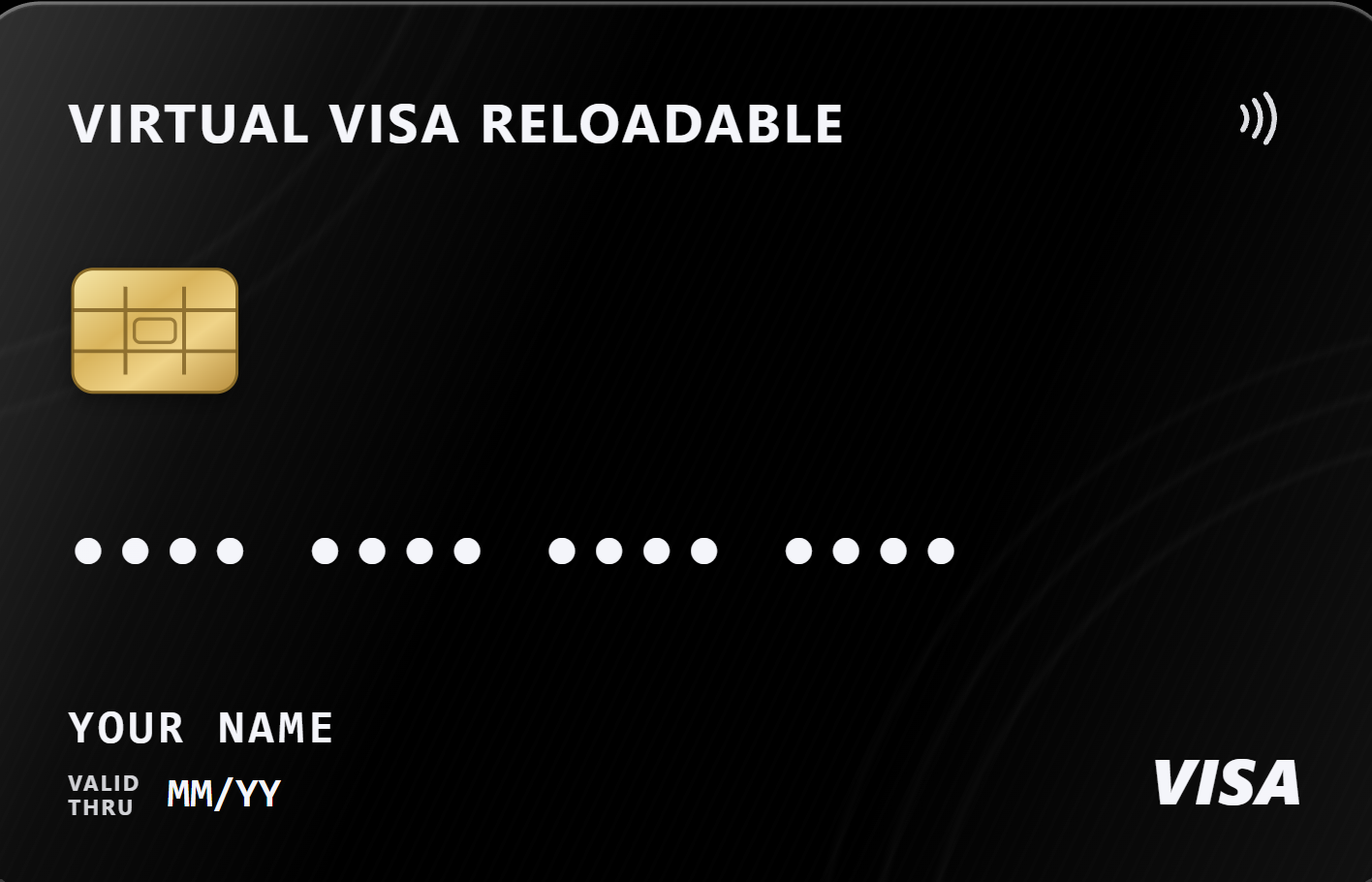
  5. Gpayvcc Virtual Visa Reloadable
Gpayvcc Virtual Visa Reloadable
仅需邮箱
虚拟卡 Visa
4.9
综合
获取此卡
Gpayvcc Virtual Visa Reloadable logo

Gpayvcc Virtual Visa Reloadable

发行方 Gpayvcc

虚拟卡•Visa•仅需邮箱
获取此卡

A high-anonymity virtual Visa card designed for recurring payments and advertising budgets without requiring identity verification. It offers global accessibility but carries a significant upfront issuance cost.

优点

  • +No ID verification required (Level 1 KYC)
  • +Supports Apple Pay and Google Pay
  • +Instant issuance within 5 minutes
  • +Ideal for recurring subscriptions

缺点

  • -Very high $200 issuance fee
  • -No refunds on card balances
  • -High crypto-to-fiat conversion spread
  • -No physical card option
4.9/10
综合一般
4.3/10
社区评分基于 13 个信息来源
Lv 1
KYC 等级仅需邮箱

目录

卡片概览

Gpayvcc Virtual Visa Reloadable
奖励
返现
0%
返现币种
—
质押奖励
✗
质押年化收益
—
新用户奖励
$0
推荐奖励
$0
费用
月费
免费
开卡费
$200
ATM 取现费
免费
外汇兑换费
免费
充值费
免费
交易拒付费
免费
限额
每日消费
不限额
每月消费
不限额
ATM 取现
不限额
卡片信息
卡片类型
虚拟卡
卡组织
Visa
Apple Pay
✓
Google Pay
✓
奖励
返现
0%
返现币种
—
质押奖励
✗
质押年化收益
—
新用户奖励
$0
推荐奖励
$0
费用
月费
免费
开卡费
$200
ATM 取现费
免费
外汇兑换费
免费
充值费
免费
交易拒付费
免费
限额
每日消费
不限额
每月消费
不限额
ATM 取现
不限额
卡片信息
卡片类型
虚拟卡
卡组织
Visa
Apple Pay
✓
Google Pay
✓

KYC 要求

Level: 仅需邮箱
邮箱验证
需要
手机验证
不需要
身份证件
不需要
地址证明
不需要
自拍验证
不需要

社区评分

4.3/10
来源于
@Trustpilot - gpayvcc.com review profile (US locale)“The main sentiment repository for this product and the single most important source in the corpus. Carries a TrustScore around 4.5 to 4.6 from roughly 34 to 35 reviews, 88 percent of them five stars, and layered over it a formal Trustpilot notice that the rating is unavailable because the company breached platform guidelines by displaying Trustpilot content in a misleading way. That is an integrity flag, not an ordinary mixed-reviews page. The positive reviews cluster around instant activation for ad accounts, first-try checkout with no verification loops, sub-five-minute crypto top-ups and clean Apple Pay and Google Pay linking, but they read as templated and reach for trade vocabulary - clean BIN numbers, gateway authorization, repetitive verification loops - that retail buyers do not use spontaneously. The minority complaints are far more specific and carry more weight: a card paid for and issued, then failing repeatedly at checkout on a time-sensitive payment, with slow support and a refund that took repeated chasing. Against terms that make minted card balances strictly non-refundable, that failure mode means total loss.”@Trustpilot UK - gpayvcc.com review profile“UK-locale mirror of the same profile, checked in the second research pass to establish whether the guideline-breach notice and the review distribution were locale-specific artefacts. They are not. The same suppression notice and the same clustering of formulaic praise appear here, with the visible review count varying by locale between roughly 13 and 35 over twelve months. Confirms the integrity flag is applied to the company account rather than to one regional page.”@Trustpilot NZ - individual review permalink“A permalink to a single review on the New Zealand locale, catalogued in the second pass while mapping how the same small review set surfaces across regional Trustpilot domains. Contributes to the picture of a thin, heavily polarised review base spread across locales rather than a deep corpus in any one of them. Its individual rating was not separately verified in either pass, so it is recorded as evidence of distribution rather than of sentiment direction.”@Trustpilot - Card Processing Service category index“Category listing used to locate the company inside Trustpilot's own taxonomy and to see it ranked against established payment processors. Establishes that the operator competes in a crowded segment full of higher-volume, un-flagged profiles, which is the comparison that makes a suppressed rating on a 35-review base stand out. Carries no direct user testimony.”@Trustpilot - Card Processing Service category, page 13“Deep pagination of the same category index, recorded as the page on which the company surfaces. Its value is negative evidence: the placement confirms low review volume and low engagement relative to the category, against first-party claims of 1,880-plus users and five million transactions. No user testimony.”@Trustpilot - Administration and Services category, page 231“Secondary category index where the company also appears, catalogued while confirming which Trustpilot taxonomies list the business and how far down the listings it sits. Useful only for corroborating the operator's review-platform footprint. Contains no reviews or user commentary.”@ProvenExpert - gpayvcc profile“A second review-platform profile that exists but carries no reviews at all - the page is company-supplied marketing copy with an empty ratings base. Its real contribution is a discrepancy: the address here reads San Francisco while the Trustpilot profile lists Long Island, New York, and multiple phone numbers appear across listings. For a business holding custodial balances and issuing card credentials, that inconsistency, combined with the absence of any named licensed issuer, BIN sponsor programme or regulator, is a substantive trust problem.”@Trustpilot - gpaynow.com (adjacent name, category context only)“Included strictly as category context and explicitly not as evidence about this operator, since no common ownership is established. The profile documents the standard gray-market virtual-card failure pattern: an extra activation deposit demanded after the card is already paid for, WhatsApp-based support that stops responding, and clusters of five-star reviews that read as manufactured. Relevant because the naming cluster and product model are the same, and because it shows what the downside scenario looks like when a reseller of this type fails.”@Trustpilot UK - gpaynow.com (adjacent name, category context only)“UK mirror of the adjacent profile above, checked to confirm the complaint pattern is not a single-locale anomaly. Same post-purchase deposit demands and same support-vanishing complaints. Category risk context only, not attributed to this operator.”@Trustpilot CA - gpaynow.com (adjacent name, category context only)“Canadian mirror of the same adjacent profile, catalogued to gauge how widely the complaints spread. Reinforces that the pattern is consistent across locales rather than isolated to one market. Category risk context only.”@Trustpilot - gpaynow.net (adjacent name, category context only)“A second domain in the same naming cluster with a comparable complaint profile, including the pattern of sites in this segment closing and reappearing under new domains. Recorded to document how short-lived these operations tend to be, which is the main argument for keeping balances low and spending immediately. No ownership link to this operator is claimed.”@Trustpilot - gpaycard.com (adjacent name, category context only)“Third domain in the adjacent cluster, showing the same activation-fee and unreachable-support complaints. Its value here is to establish that the failure mode described in this product's own minority complaints - paid card, dead at checkout, slow or absent refund - is the category norm rather than an outlier. Context only, not attribution.”@Vizocard - GPay virtual card blog post (checked, then set aside)“A competitor blog post that ranks for near-identical wording but describes Vizocard's own product, not this one. Catalogued to document a real research hazard: searches for this card collide with Google Pay and UPI content and with similarly named issuers, which is part of why the independent evidence base looks thinner than search volume suggests. Contributes no sentiment about this product.”

Gpayvcc Virtual Visa Reloadable scores 4.3/10 across 13 catalogued third-party sources, unifying two independent research passes that agree on what the product does and disagree sharply on how much credit it deserves for it. Both confirm the mechanics: this is a custodial prepaid reseller, not a bank and not the issuer. An email address and a crypto transfer in USDT, BTC or ETH produce a live 16-digit Visa with CVV and expiry in minutes, delivered through a web dashboard, and the prepaid ceiling genuinely protects users from overdrafts and runaway trial subscriptions. Both passes also confirm the demand is real rather than manufactured: Argentine and Ecuadorian buyers escaping PAIS-style tax levies and FX spreads, Egyptian users hitting Central Bank cross-border caps, Indian users blocked by Aadhaar and PAN requirements and RuPay gateway failures, expats in Germany and the Netherlands without a Schufa score or BSN, and media buyers whose local cards die at Meta and Google Ads billing. And both agree on the economics: a 200 dollar one-time issuance fee for this tier is extreme in a market where Revolut, Wise and Monzo issue virtual cards free, there is no cashback, staking, points or rewards of any kind, and there is no native iOS or Android app - a browser dashboard plus emailed card credentials is the whole product. Where the passes diverge, the concrete evidence wins. One scored onboarding a perfect 10 on the strength of the no-KYC marketing repeated across the India, Germany, Netherlands and ads pages; the other found the South Africa page mandating FICA identity verification before issuance with spend limits on unverified accounts, and Russian users gated behind a 1,000 dollar minimum deposit alongside a hard no-refund rule. Conflicting first-party claims about the operator's own onboarding cap this at 8: far easier than a bank, but not the email-only experience advertised, and post-payment verification demands are the documented failure mode across this category. The same split hit fees - one pass recorded no monthly or inactivity charges, the other found an inactivity fee after 12 months on the South Africa page plus issuance, conversion spread, per-transaction and instant-EFT charges acknowledged in prose but deferred to a pricing page rather than published as a schedule - so fee efficiency lands at 3, and a reviewer who was otherwise positive still docked them for fees not being explained up front. App experience settles at 3 rather than 1 or 5: the dashboard exists and Apple Pay and Google Pay linking is repeatedly reported to work without billing-address rejection loops, but there is no app store presence, no independent ratings and no walkthroughs to verify any of it. The credibility problem is the headline finding and the reason the overall score sits where it does. Trustpilot has suppressed the company rating for a guidelines breach, stating the business displays Trustpilot content in a misleading way, and the five-star reviews underneath cluster tightly around trade vocabulary - clean BIN numbers, gateway authorization, repetitive verification loops - that ordinary retail buyers do not spontaneously write. Against homepage claims of 1,880-plus users, 99 percent satisfaction and five million transactions, there is no organic discussion on X, Reddit or YouTube whatsoever, which is the opposite of how established crypto cards behave. The company address differs between listings, Long Island, New York on Trustpilot against San Francisco on ProvenExpert, and no licensed issuer, BIN sponsor programme or regulator is named anywhere. The minority complaints are far more specific than the praise and carry more weight accordingly: a paid, issued card that failed repeatedly at checkout, a missed time-sensitive payment, slow support and refunds requiring repeated chasing - set against terms that make a minted card balance strictly non-refundable, so a dead BIN is a total loss of both the issuance fee and the load. Adjacent domains in the same naming cluster show the classic gray-market pattern of post-purchase activation demands and vanishing support, which is category context rather than proof about this operator. Treat this as a high-risk prepaid reseller rather than a regulated card: some users clearly get a working number for ads and subscriptions, others get a dead one and a slow refund, so load nothing you cannot afford to lose.

分项评分

KYC 便捷度
8/10
费用性价比
3/10
奖励价值
1/10
App 体验
3/10
隐私
7/10
客服质量
4/10

功能

不支持

支持的加密货币

BTC iconBTCETH iconETHUSDT iconUSDTUSDC iconUSDC